Ayurvedic Recipe: Restorative Kitchari by jennifer kurdyla
We’re on the precipice of autumn. Despite the lingering warm temperatures, perhaps we’re attuned to the fleeting hints of change—a sweeping breeze, plants starting to crisp. According to Ayurveda and yogic philosophy, autumn is governed by vata dosha: a time of wind, movement, and change. And while it brings clarity and creativity, it can also stir instability, anxiety, and depletion, especially in a fast-paced, modern world.
When we align with the rhythm of the season, when we slow down with it on purpose, we open ourselves to the opportunity for profound recalibration.
This week I’m handing over the reins of the blog to Jennifer Kurdyla, an Ayurvedic practitioner, yoga teacher, author of the new book Sense Care is Self-Care: Ayurveda & Yoga for Mental Resilience. Below she shares a restorative recipe for kitchari from the book she also co-authored, Root & Nourish: An Herbal Cookbook for Women’s Wellness, to help support us through this seasonal transition.
On September 11 and October 9, Jennifer is offering two practices for autumn. I hope you’ll consider joining!
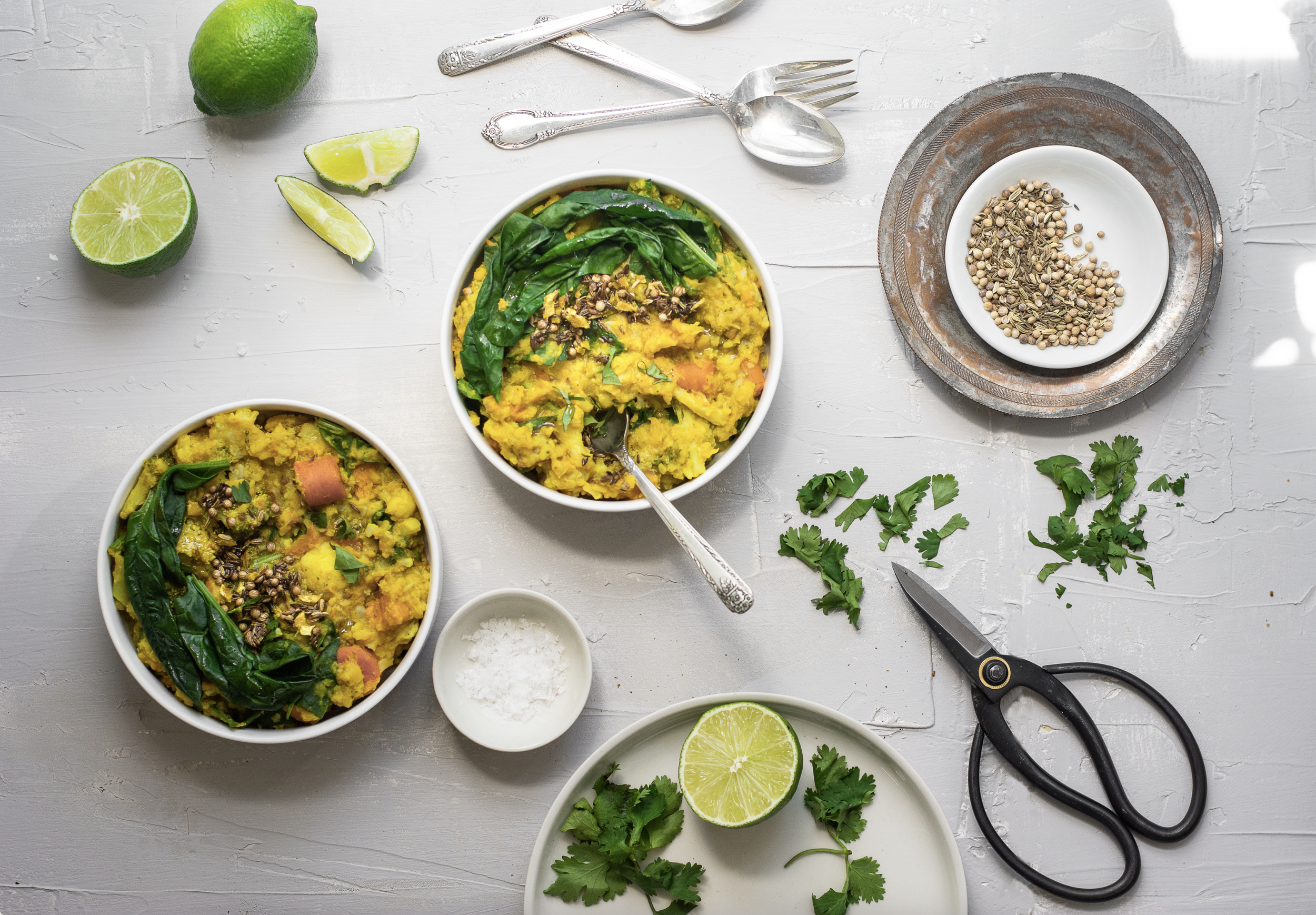
By Jennifer Kurdyla
From Root & Nourish: An Herbal Cookbook for Women’s Wellness
Kitchari is a traditional Ayurvedic medicine for any and all digestive troubles, including many of the other imbalances that arise from disturbed digestion. The main ingredients, basmati rice and moong dal (split mung beans), are extremely easy to digest, since the tough outer shell of the rice (which is left intact in brown rice) is removed and the tiny dal kernels are already split—essentially, much of the work your body would need to do to digest the dish is already done for you, so the nutritious carbohydrates and proteins can get into your system without asking too much of your GI tract. This “complete protein” is an even more healthful way to consume protein, when it comes to actually assimilating protein’s nutrition—in case this macro has been on your mind during our recent protein craze.
Generous helpings of spices and herbs transform this kitchari from basic to craveable. Turmeric, one of the best anti-inflammatory herbs, gets mixed into the grains and given a nice, slow simmer. Hing, a traditional Indian spice ground from a dried plant resin, removes the potential gassiness of the beans and lentils. (When you smell hing, known as asafoetida in English, you’ll understand how it got the nickname “devil’s dung”! Don’t worry, though: the odor becomes a mellow and earthy taste when cooked, but you may wish to store your jar of hing inside another glass container in your cupboard.) Ayurveda’s triple threat—coriander, cumin, and fennel—form the base of the tarka, a tempering of spices that lets their essential oils bloom on their own before they’re mixed into a dish. Adjust the spices according to your taste and digestion—use less if you’re feeling very irritated or if you’re new to Indian cooking. The same goes for the vegetables: start with no vegetables, or fewer of them, if you are feeling very imbalanced, and add more as you begin to heal.
Kitchari is a wonderful meal to incorporate into your recipe rotation during seasonal transitions, as it helps to restore your digestive capacity (agni) while energies shift in your external environment. Start by having it once or twice a week leading up to the equinox/solstice; then, you might enjoy a monodiet (consuming the same food for all your meals) for one to three days around that “official” turn of the season, offering the gift of simplicity to your body and mind. Notice how the consistent nutrition, including similar meal times if possible, helps you pay more attention to the subtle changes in nature around and inside of you. How does that clarity help you listen to your cravings for the season ahead and set meaningful intentions, while more completely “digest” of what took place in the season that’s ending?
Recipe: Restorative Kitchari
Prep Time: 10 minutes, plus 30 minutes soaking time
Cook Time: 40 minutes
Serves 4
Ingredients
½ cup uncooked white basmati rice, soaked for 30 minutes
½ cup dried moong dal (split mung beans), rinsed
1 teaspoon ground turmeric
¾ teaspoon mineral salt
½ teaspoon hing
1 cinnamon stick, or 1 teaspoon ground cinnamon
6 whole green cardamom pods, lightly crushed, or ½ teaspoon ground cardamom
2 to 6 cups chopped mixed vegetables (carrots, broccoli, spinach, cauliflower, and/or sweet potato, chopped into small, even pieces; optional)
TARKA
1½ teaspoons cumin seeds
1½ teaspoons coriander seeds
½ teaspoon fennel seeds
1 tablespoon ghee or coconut oil
1 tablespoon grated fresh ginger
TO SERVE
½ cup chopped fresh cilantro (see Note)
1 lime or lemon, cut into wedges
Mineral salt
Freshly ground black pepper
Instructions
1. Drain the rice, then rinse it two or three times, until the water runs clear. Combine the rice, dal, turmeric, salt, hing, cinnamon, and cardamom in a large pot and add 4 cups water. Bring to a boil over medium heat, then reduce the heat to low. Cover and simmer, without stirring, for 20 minutes. Check to see if the kitchari is drying out; if it is, add 1 cup more water.
2. Meanwhile, make the tarka: Lightly grind the cumin, coriander, and fennel seeds with a mortar and pestle, or gently crush between your two hands. Warm the ghee or oil in a skillet over medium heat for about 1 minute. Add the ground spices and the ginger, and stir to coat. Reduce the heat to low, and cook until the spices are fragrant, about 5 minutes. Be sure to watch the tarka, as the spices can burn easily. Remove from the heat and set aside.
3. If using the vegetables, add them to the pot with the kitchari. Stir gently to combine, and cover for another 10 to 15 minutes, until the dal and vegetables are very soft, like a porridge.
4. When the kitchari is done, add the tarka to the pot and stir just to combine.
5. Serve with the cilantro and a squeeze of lemon or lime juice, and season with salt and pepper, as desired.
UPCOMING CLASSES WITH JENNIFER
Āyurvedic Yoga for Autumn
Explore practices to support you through the transition into fall.
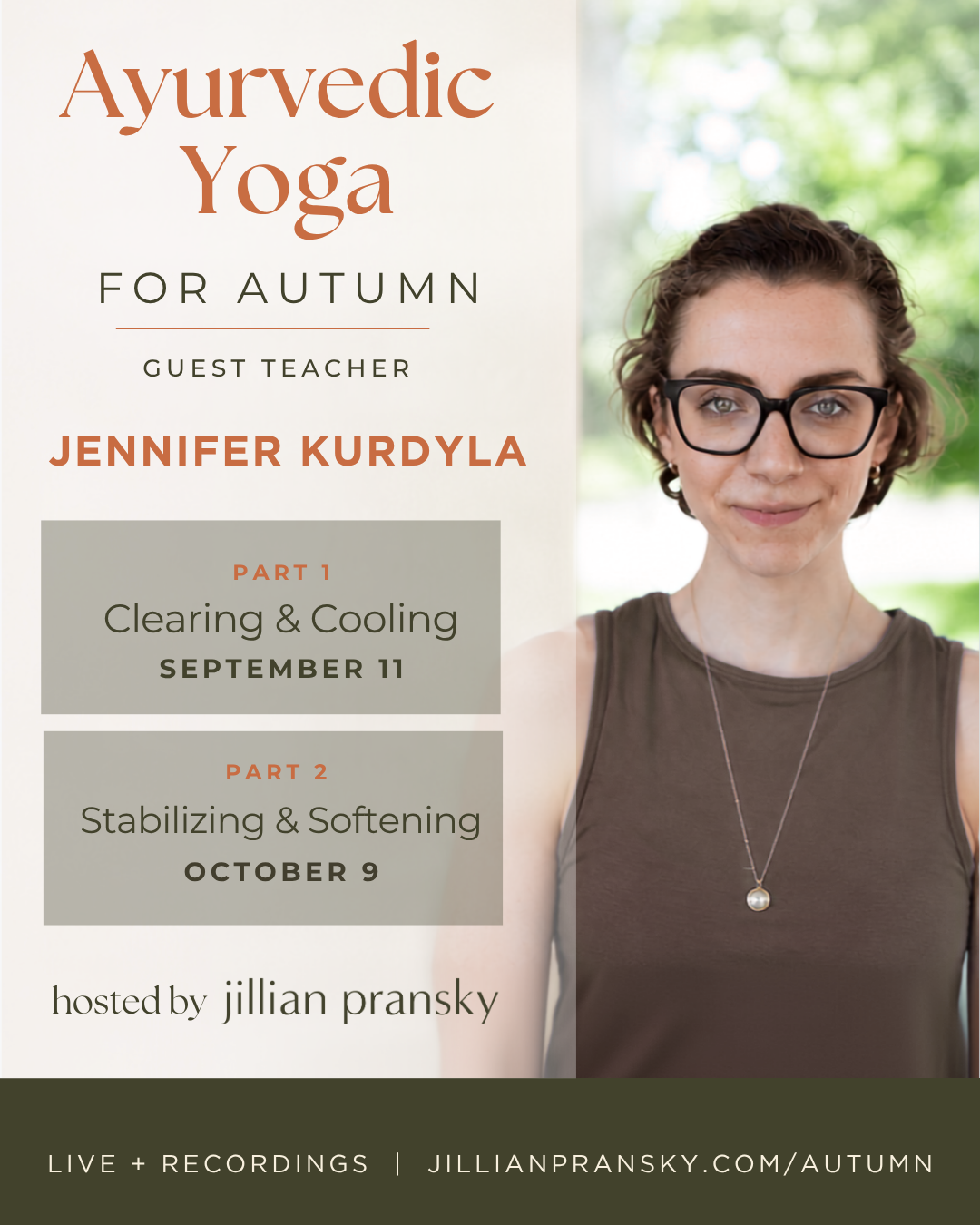
Part 1—Clearing & Cooling
Friday, September 11
10:00-10:45am ET
As we come to the end of summer, the wisdom of nature offers dropping temperatures and increasing darkness as a way to cool the microcosm and the macrocosm. Our practice will support this organic shift of energy by helping to move lingering heat in the body and mind down and out—a first step toward the more inward orientation of autumn. Through cooling, calming breath, twists, lymphatic massage, and seated yin-style stretches, we'll celebrate landing back home in our bodies after a season of travel, adventure, and growth.
Part 2—Stabilizing & Softening
Friday, October 9
10:00-10:45am ET
Moving deeper into the autumn season, many of us will naturally crave the comforts of cozy sweaters, warm and unctuous meals, and deeper rest. Once the heat of summer has cleared out, we can welcome these qualities with open hearts and benefit from their profound physical and energetic nourishment—which is exactly what we'll cultivate in this practice. Balancing dynamic work in the lower body and core, with smooth and rhythmic flowing sequences, we'll encourage the reigning in of our vital life force and attention, leaving us primed for a season of harvesting, reflection, and integration.
meet jennifer kurdyla
Jennifer Kurdyla is an Ayurvedic practitioner, herbalist, movement teacher (yoga, Pilates, and strength), and writer based in Brooklyn, New York. Committed to sharing the ancient tools of Ayurveda and yoga with modern communities, she helps her clients and students discover personalized rituals that support intentional engagement with their inner and outer experiences through the senses. As a movement teacher, she offers a unique blend of modalities that combine softening tension, cultivating strength and endurance, and increasing mobility and circulation to support the overall health of the physical body and alignment with subtle energy. A former book editor and graduate of Harvard University, she is also the author of two books—Root & Nourish: An Herbal Cookbook for Women's Wellness and Sense-Care is Self-Care: Ayurveda & Yoga for Mental Resilience. Learn more on jenniferkurdyla.com