Landing Into The Power of the Pause with a 10-Minute Meditation
It’s clear that many of us are managing chronic stress and anxiety, and it seems the world is only exacerbating it these days. The pace of the day, our inbox, and the newsfeed makes it feel impossible to step off of the treadmill and take a break. However, we don’t have to take a weeklong vacation in order to reset and come back home to ourselves.
We need to learn how to Pause.
However, the act of Pausing isn’t so accessible for most of us. We can’t just Pause on demand, especially in the heat of the moment. However, we can train in making Pausing a new habit that we can eventually integrate not only into our day but into the challenging moments themselves.
Pausing can create the space we need to see things more clearly, connect with ourselves and others, and respond more skillfully. It just takes practice. In my new book, The Power of the Pause, I’ve deconstructed the process into simple steps. Read more about the technique and the first step here.
The Practice of Pausing
Since we can’t just pause on-command, I developed a six-step technique called LAR-LAR (Land, Arrive, Relax, Listen, Attend, Respond/Repeat) to support us in learning this transformative practice.
It interrupts our minds on autopilot and helps us develop our ability to Pause as a new skill. It’s essential to understand that when we are in the stress response, our nervous systems are designed NOT to let down our guard. But LAR-LAR can help us rewire the nervous system, making Pausing more accessible in the heated moments of our lives. The first LAR (Land, Arrive, Relax) helps us set the neurological conditions to consciously relax and self-regulate.
It only takes 90-seconds to Pause—to create some space for us to do something different with our stress. (I explain the science behind the significance of 90 seconds in the book.)
It all begins with Landing, which is the foundation of the practice. Keep reading to learn more and experience a free 10-minute practice.
Learning to Land: Setting a Foundation
After decades of teaching the pause, I know for certain that most people can’t simply “pause” on command—especially when they are stressed, which is when they need it most. It makes sense: Our brains are not designed to pause when we are feeling threatened, defensive, scared, or anxious. Our neurology shifts into survival mode, relying on unconscious reactions. However, we can learn to Pause on purpose so the skill is available to us when we need it most.
It all begins with Landing—learning to build a sense of support with the ground underneath us. In doing this, what we are really doing is communicating a sense of safety to the brain.
Think about it: The feeling of being unsupported and unsafe makes us continually react to the present moment—as well as all our interactions within those moments—from a stance in which we feel the need to protect ourselves. We react from a place where we are still fighting and fleeing.
There are two aspects of learning to Land. The first is learning to remember or recognize that there is support (in fact, a whole planet) underneath our bodies. But then we must also learn to allow ourselves to physically rest on that support, to give our weight to it. Allowing ourselves to be supported is how we shift into a state where we can Pause.
It doesn’t mean that we won’t still be angry, irritated, sad, or afraid. It means that, with all of our emotions, we train ourselves to Land anyway.
In short, LAR-LAR, the path to Pausing, begins with learning to allow the ground to carry us, and learning to allow our body to be on the earth. When we have a sense of support, we remember our belonging on the earth. We learn that there is always support available.
We can allow the earth to hold us. When we begin to allow ourselves to land in our bodies on the earth, we remember our belonging on the earth. We can feel more in the moment, more completely.
Practice Landing
Landing is both an entire practice for many of us, and it is also the foundation of Pausing that creates space and resources for us to manage our responses in the world more skillfully.
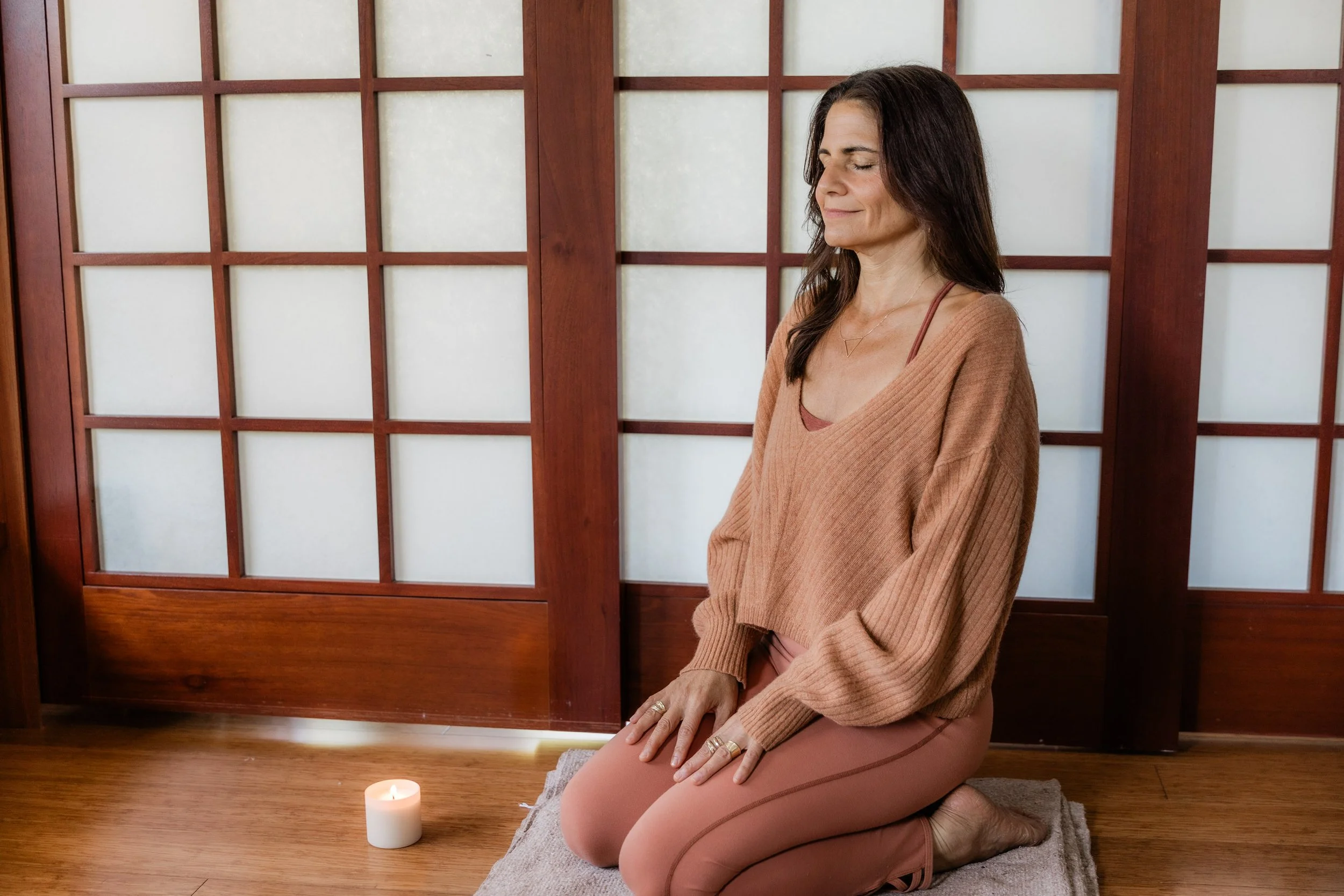
This practice will incorporate the visualization of an hourglass so that we can mindfully release ourselves into the loving support of the earth.